


The Division Resurgence
4.53.48K Reviews
App Specs
- Version
- 1.60224.0
- Updated On
- License
- Free
- Downloads
- 1,000,000+
- Developer
- Ubisoft Entertainment
- Categories
- Action
- Platform
- Android
Screenshots

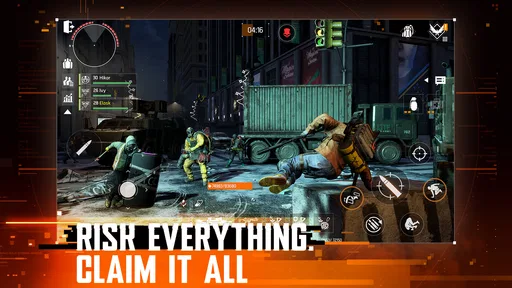
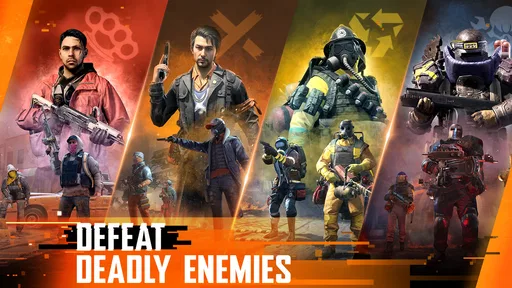
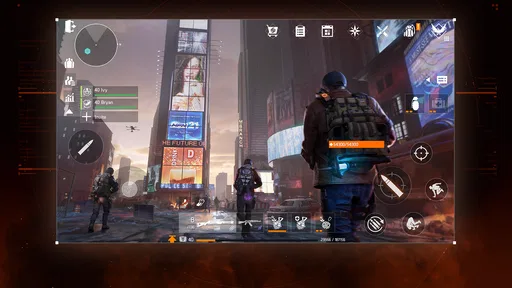
 Analysis by AppCompare
The first time I played The Division Resurgence, what stayed with me was not simply the promise of a large action game on a phone. It was the feeling of moving through a New York that looks damaged, tense, and strangely familiar, while every street seems to ask whether I should push forward or take a safer route. That mood gives the game a stronger identity than a quick burst of shooting, and it is the main reason I kept wanting to return.
This is a free action game from Ubisoft Entertainment, aimed at mature players and carrying a 17+ content rating. It has already attracted over a million installs and holds a 4.5 average from around 103 thousand ratings, which suggests that its console-style ambition has found an audience on mobile. I would not describe it as a lightweight game for filling two spare minutes, though. It asks for attention, a reasonably capable device, and a willingness to learn how its shooting, movement, equipment, and mission rhythm fit together.
New York feels like the real starting point
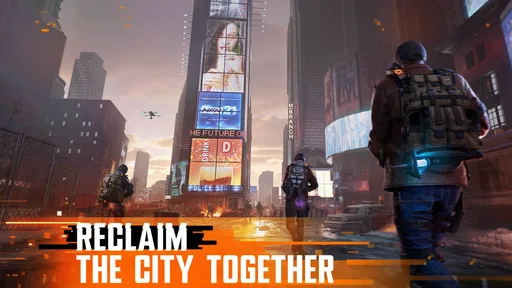
The setting does much of the early work. Instead of presenting a clean arena that exists only to host combat, the game uses a troubled version of New York as a visual and emotional frame. Streets, buildings, and public spaces communicate the aftermath of collapse through clutter, damage, blocked paths, and the uneasy contrast between ordinary urban details and active danger. I found that this made even short trips feel more purposeful.
The art direction is restrained rather than cartoonish. That matters because the game’s central tension depends on believing that this city was once functional and is now barely holding together. The muted surroundings leave room for combat effects and enemy movement to read clearly, but they also create a consistent melancholy. I rarely felt that the scenery was competing with the action for attention.
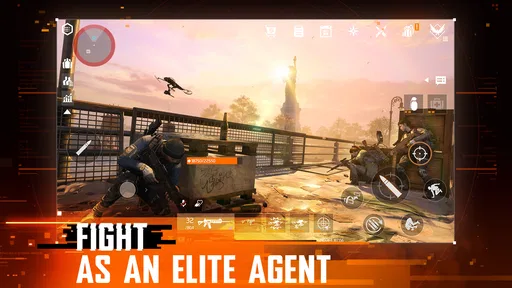
That visual language also helps explain why cover-based encounters suit the game. When the environment looks like a real neighborhood rather than a collection of floating platforms, slipping behind a vehicle, wall, or piece of street furniture feels like a natural response to danger. The setting gives the mechanics a reason to exist. I was not just switching between marked positions; I was reading the shape of a street and deciding where I could survive the next exchange.
One useful habit is to pause before entering a new area instead of immediately following the most obvious route. The city often rewards a slower scan of corners, elevation changes, and possible retreat lines. This is not merely a visual appreciation exercise. It reduces the chance of being trapped when a fight develops in an open space, and it makes the game’s environments feel more like tactical problems than decorative backgrounds.
A serious tone that supports the action
The mature presentation is important to the overall effect. The game does not feel designed around bright, disposable spectacle. Its atmosphere is more anxious and grounded, with the damaged city acting as a constant reminder that every mission takes place inside a larger crisis. That tone gives ordinary objectives more weight, even when the actual task is familiar: move through an area, deal with opposition, and reach the next point.
Worth Reading Before You Choose

EA SPORTS FC Mobile 26 Is a Bigger Football Game, but It Takes Time

Flipboard Shows What News Apps Must Do Beyond the Feed

Switching to Android Auto Means Rethinking Your Driving Routine

Google Calendar Makes a Crowded Week Easier to Manage

Ludo King Makes the Most of the Minutes Between Plans

Baby Panda World Brings Quick Play to Modern Phones, but Its Game Library Feels Busy
I also appreciate that the setting does not need to shout constantly. The strongest moments often come from the spaces between firefights, when the visual details create a low level of suspicion. A quiet street can feel more threatening than a crowded one because I start wondering what is around the next corner. This is where the game separates itself from many mobile action alternatives that prioritize immediate color and noise over sustained place-making.
There is a trade-off, however. A serious, subdued world can feel repetitive if I play for long stretches without changing my approach. The same urban palette and tense mood are effective in a focused session, but they do not provide the constant visual variety of a fantasy action game or a bright arcade shooter. Players who need frequent changes of scenery may find the atmosphere heavy rather than immersive.
Sound gives each encounter room to breathe
The sound design works best when it supports distance and pressure. Gunfire does not feel like a single undifferentiated layer placed over the screen; it helps me judge whether danger is close, across the street, or arriving from a direction I have neglected. That makes audio more than decoration. In a difficult encounter, listening can be part of the same awareness loop as watching enemy movement and checking cover.
I recommend playing with headphones when possible, especially during the first few sessions. The visual interface already carries a lot of information, and sound can provide an extra warning without adding another icon to track. I found this particularly useful when I was focused on one opponent and needed to notice that the wider fight had changed around me.
The environmental audio also reinforces the setting’s loneliness. The city does not sound like a lively tourist destination; it sounds interrupted. That distinction helps the game maintain its mood between missions. Even when I was simply moving from one objective to another, the audio kept the sense that the world was unstable rather than safely waiting for the next encounter.
Pacing is closely tied to this soundscape. The game is more convincing when it allows a short approach, a moment of uncertainty, and then a burst of violence. If I rushed every section, I lost some of the tension that makes the setting memorable. If I slowed down too much, the journey could feel like preparation without enough payoff. The best rhythm came from alternating careful movement with decisive action.
Why the rhythm matters on a phone
Mobile games often need to respect interruptions, but a cinematic, tactical action game cannot make every moment disposable. My practical advice is to begin a mission when I can give it a clear block of attention rather than launching it while expecting a call or a quick commute. Losing concentration during a firefight is more damaging here than in a simple endless runner, because positioning and timing both matter.
That does not mean every session has to be long. The game can still work in shorter focused periods when I choose a clear objective and avoid wandering into a complicated sequence without enough time. The important distinction is between a short session with a plan and a rushed session where I keep stopping in the middle of decisions.
Players who prefer constant action may find the quieter transitions slow. I think that criticism is fair. The pauses are valuable for atmosphere, but they also mean the game is not an ideal choice for someone seeking an immediate arcade loop with no travel or setup. Here, the walk toward the fight is part of the experience, and whether that feels meaningful depends on how much you enjoy mood and anticipation.
Touch controls need a personal setup
The biggest mechanical question is not whether a mobile device can display a serious third-person action game. It can. The real question is whether the controls let me make fast decisions without fighting the screen. I needed time to settle into movement, aiming, camera adjustments, and the transition between taking cover and exposing myself. The game becomes much more comfortable once those actions feel automatic, but the learning period is real.
I suggest adjusting the layout before judging the game. A control arrangement that works for one player may place an essential action under an awkward thumb position for another. I prefer keeping movement and camera corrections easy to reach while leaving enough screen space to see incoming threats. Small changes can make a larger difference than simply increasing sensitivity everywhere.
Another practical tip is to separate deliberate aiming from panic movement. When I tried to perform both with the same frantic gesture, I often lost the target or left cover at the wrong moment. A better workflow is to choose cover, settle the camera, expose only as much as needed, and then move once the immediate threat changes. This sounds obvious, but the touchscreen makes rushed inputs especially costly.
The game’s action mechanics fit the setting because survival depends on reading space rather than only reacting quickly. Cover is not a decorative button. It changes how I approach a group, how long I can stay exposed, and whether I have a safe fallback. That gives the shooting a more measured character than a typical run-and-gun mobile title.
Progression is useful when treated as preparation
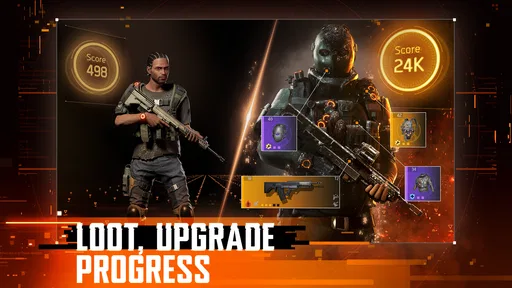
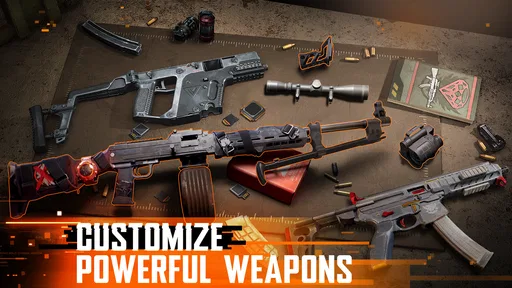
The equipment and character-growth side of the experience works best when I treat it as preparation for a particular style of play, not as a reason to collect every improvement without thinking. Before a mission, I like to consider whether I need more reliable damage, better control of a difficult encounter, or a safer way to recover from mistakes. This makes upgrades feel connected to decisions in the field.
There is a subtle trade-off here. Players who enjoy comparing equipment and gradually refining a build will find more to consider than in a straightforward shooter. Players who want to choose one weapon, master it, and ignore menus may feel interrupted by the broader progression layer. I would skip this game if inventory decisions are something I actively dislike, because the long-term appeal depends partly on engaging with that preparation.
Because the game is free to start and includes in-app purchases ranging from under a dollar to nearly a hundred dollars per item, I would set a personal spending boundary before becoming invested. That is not a judgment on every purchase; it is simply sensible in a progression-focused action game. I prefer to decide in advance whether I am playing entirely without spending or allowing a limited budget, rather than making decisions after a frustrating mission.
The current version is 1.60224.0, and the minimum operating-system requirement is Android 6.0. Those details make the game accessible across a broad range of software versions, but compatibility on paper is not the same as a comfortable experience on every device. A larger screen can make aiming and interface reading easier, while a weaker or older phone may make the visual ambition less enjoyable. I would check available storage, heat, and battery behavior before committing to it as a regular game.
How it compares with other mobile action games
Compared with a fast multiplayer shooter, this game is more interested in atmosphere, positioning, and a continuing sense of place. A competitive shooter is usually better when I want a quick match, immediate opponents, and a clear score-driven loop. The Division Resurgence is a stronger fit when I want the city itself to carry part of the experience and when I enjoy preparing for encounters instead of treating every fight as a reflex test.
It also differs from a traditional open-world mobile adventure. Those games may offer broader exploration, more varied scenery, or a lighter tone, while this one keeps returning to urban tension and tactical combat. If my priority is sightseeing or carefree discovery, I would choose something else. If I want a damaged modern city where the mood remains consistent and combat is built around space, this is more distinctive.
Against simpler twin-stick or arcade action games, the advantage is depth of context. The disadvantage is friction. There are more systems to understand, more attention required during encounters, and a greater chance that a short session will end just as I become properly engaged. I would recommend a simpler alternative to someone who wants instant clarity and minimal menus.
One non-obvious strength is how the visual and mechanical choices reinforce one another. The subdued streets make cover easier to interpret, the sound helps define unseen danger, and the slower pacing gives me time to make a tactical choice. None of those elements alone would carry the game, but together they create a coherent playable mood. That coherence is more valuable than any isolated graphical flourish.
Who will enjoy it, and who should pass
I think the game is best for players who already enjoy third-person action, urban survival stories, and the satisfaction of improving through better decisions rather than speed alone. It is also a good choice for someone who wants a substantial free action game and is comfortable learning touch controls over several sessions. The large audience behind it, reflected in its install count and rating activity, makes it easier to see why the format appeals to mobile players looking for something more ambitious.
I would be more cautious recommending it to someone with limited patience for setup, progression, or repeated tactical encounters. It is not the game I would hand to a friend who wants a cheerful, instantly understandable distraction. The mature tone may also be a poor match for younger players or anyone who prefers relaxed themes; the 17+ rating is part of the game’s identity, not an incidental label.
For everyday use, I see it fitting best into an evening session or a deliberate break when I can wear headphones and focus. I would not make it my default choice during a crowded commute, when screen glare, interruptions, and limited attention undermine the very qualities that make it work. A quick arcade game is better in that situation. Here, the reward comes from settling into the city’s rhythm and making a sequence of good choices.
My strongest practical advice is to judge the game after changing the controls, using headphones, and playing slowly enough to read the environment. That combination reveals its real strengths much faster than rushing through the opening while using the default layout. It also exposes the main weakness honestly: if the touchscreen still feels uncomfortable after adjustment, the game’s atmosphere will not compensate for mechanical frustration.
The atmosphere earns its place
After spending time with it, I see The Division Resurgence as an action game whose identity comes from alignment. The art direction makes New York feel damaged but recognizable, the sound turns distance into useful information, and the pacing gives combat enough buildup to feel consequential. The mechanics are not separate from that presentation; they are shaped by it.
That does not make the experience universally ideal. Its serious tone can feel dense, its controls require patience, and its progression and purchase structure may not suit players who want a simpler mobile loop. The free entry point is welcome, but I would approach the optional spending with a clear limit and treat the game as a substantial commitment rather than a casual download.
For me, the final verdict is positive because the atmosphere is playable, not merely attractive. I remember where I was standing, why a street felt unsafe, and how a small positioning mistake changed an encounter. If you want an urban action game that takes mood seriously while keeping cover, sound, and preparation central, I would recommend giving it a careful try. If you only want instant arcade action, a lighter alternative will probably serve you better.
Pros
- Faithfully adapts The Division’s cover-based shooting to mobile.
- Large open-world areas offer plenty of exploration and side activities.
- Multiple agent builds support different weapons and playstyles.
- Regular events and missions provide reasons to return frequently.
- Controller support can make aiming and movement more comfortable.
Cons
- Requires a powerful phone for smooth performance and high graphics settings.
- Large downloads and updates can consume significant storage space.
- Touch controls may feel awkward during intense firefights.
- Online-only gameplay prevents playing during travel without a stable connection.
- Battery drain and device heating can be noticeable during longer sessions.
FAQs for The Division Resurgence
What is The Division Resurgence?
The Division Resurgence is a free-to-play mobile third-person shooter and role-playing game set in Tom Clancy’s The Division universe. It brings a new campaign and story designed for Android and iOS, while retaining familiar elements such as cover-based combat, character progression, loot, missions, and a post-apocalyptic New York setting. It is intended for both solo play and cooperative multiplayer sessions.
Can The Division Resurgence be played offline?
No. The Division Resurgence requires a persistent internet connection because its missions, progression, matchmaking, account data, and live-service features depend on online servers. A stable Wi-Fi or mobile-data connection is recommended, especially during cooperative activities and larger combat encounters. Players should also expect occasional maintenance, updates, or server availability issues that may temporarily prevent access to the game.
Does The Division Resurgence support multiplayer and co-op gameplay?
Yes. Cooperative play is one of the main features of The Division Resurgence. You can team up with other agents to complete missions, fight enemy factions, explore dangerous areas, and tackle more challenging activities. The game is also designed to offer a solo experience, so playing alone remains possible. However, coordinating with teammates can make difficult encounters more manageable and enjoyable.
Is The Division Resurgence free to download, and does it include in-app purchases?
The Division Resurgence is distributed as a free-to-play mobile game, meaning you can download it without paying an upfront purchase price where it is officially available. However, the game may include optional in-app purchases connected to cosmetic items, progression-related features, passes, or other live-service content. Before downloading, parents and players should review the store listing and account payment settings to understand the available spending options.
What devices are compatible with The Division Resurgence?
Compatibility depends on your Android or iOS device, operating-system version, available storage, and hardware performance. Because The Division Resurgence features detailed environments, real-time combat, and online multiplayer, older phones may experience reduced graphics quality, slower performance, heat, or battery drain. Check the official Google Play or App Store listing for current requirements, and make sure you have sufficient free storage for the initial installation and future updates.


